
A closer look at balloon missions
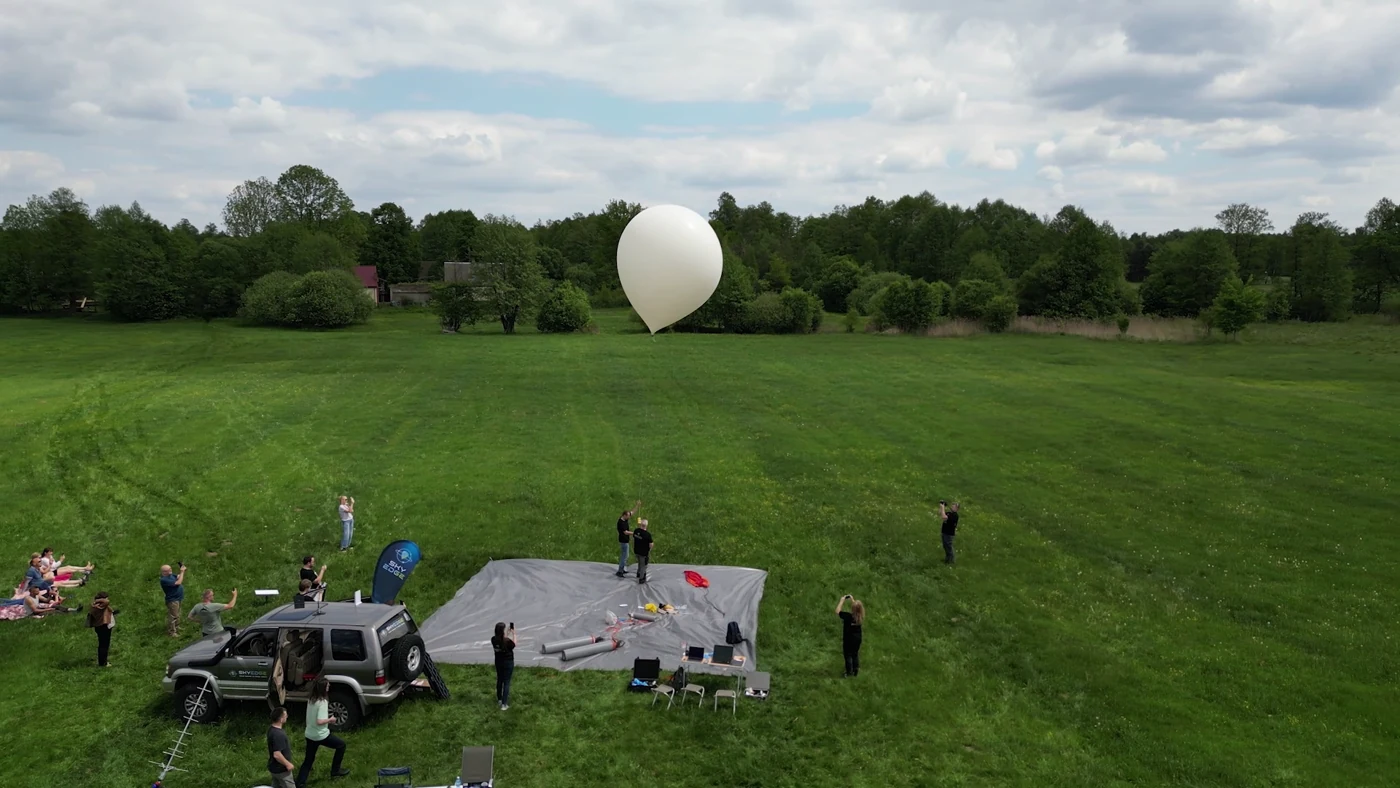
A photograph from above the clouds is only one part of a balloon mission. The more interesting story connects the view with cameras, radio signals and the team waiting for the payload to return. Here are five things worth knowing before your own project.
1. The same camera can tell a whole journey
In the Science Picnic recordings, Warsaw is visible during ascent. Later, the MASR emblem appears against clouds and a dark sky. That change of perspective gives a story a beginning and a reveal - useful for a science programme as well as a creator’s film.
2. Images can reach the ground during the flight
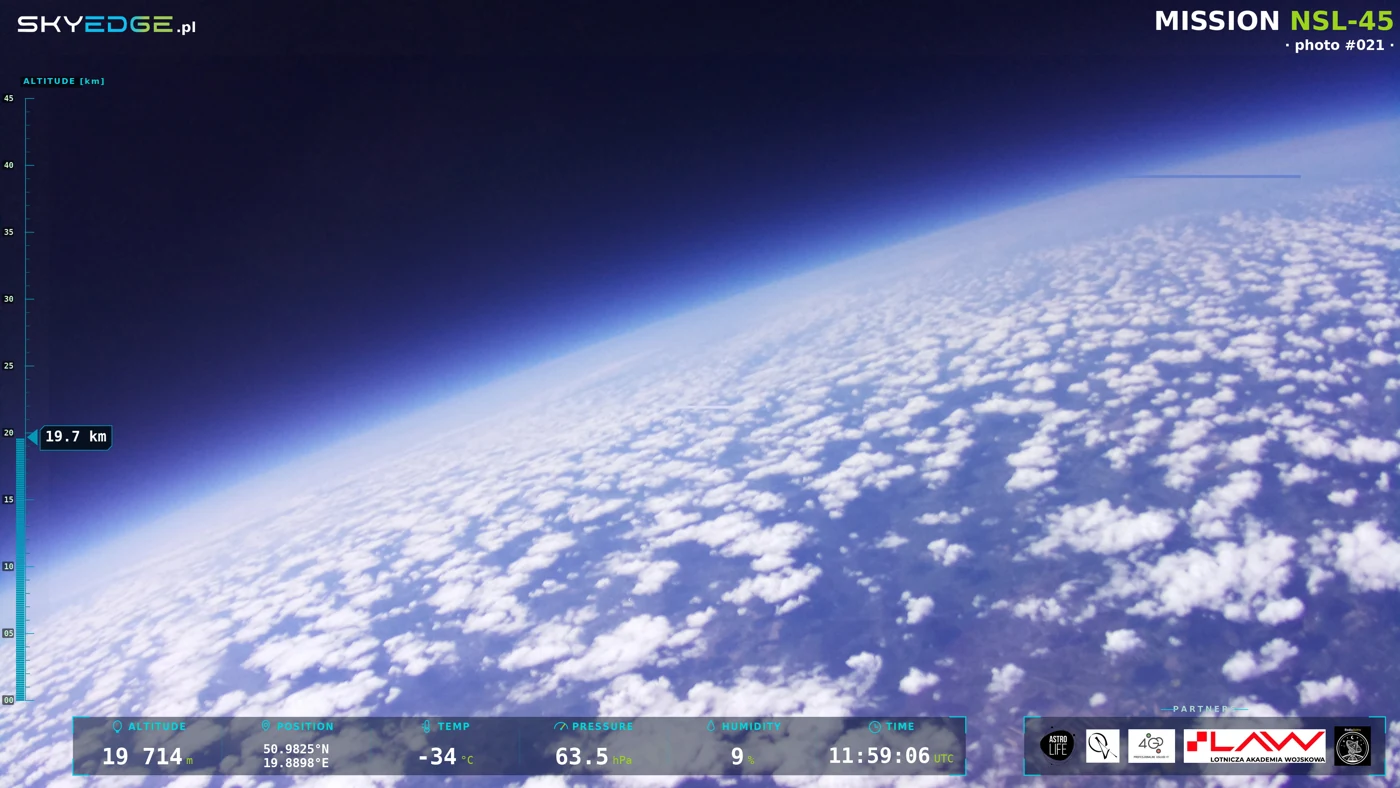
Different systems serve different purposes. NSL-45 used Wenet to send digital still images. The Science Picnic mission used DVB-S2 for an HD video downlink. Onboard recording provides another source of material to retrieve after recovery.
3. Electronics travel through changing conditions
As the balloon climbs, pressure falls and temperature changes. The Science Picnic report recorded a minimum of −50.3°C. Cameras, batteries, mounting and data recording therefore belong in the mission plan from the beginning. The recorded temperature is a result from that flight, not a fixed condition at every altitude.
4. The flight ends with work on the ground
The payload still has to be found after descent. NSL-45 combined several tracking sources, and its equipment was recovered after landing. The field recording in the mission story shows that final stage: the parachute and payload among vegetation.
5. A good project starts with the result you need
A gift, a product, an artwork or a technical instrument each suggests a different mission brief. Decide what you want to see or measure, then work through dimensions, mass, camera views and data needs. A simple description is enough to begin; the technical scope can follow from it.