
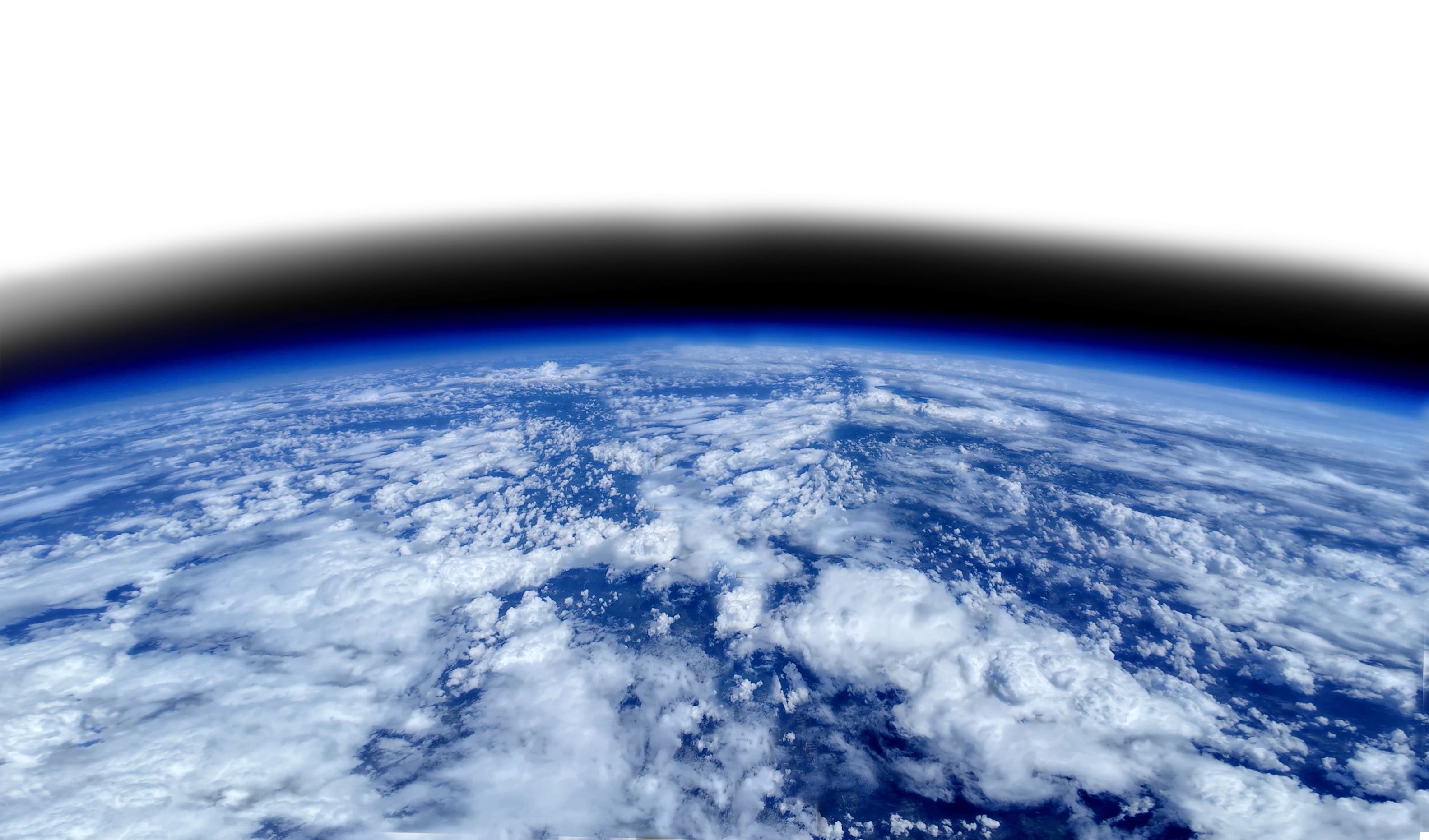
Measurements and communications.
In the stratosphere.
Research and test flights for public institutions, industry, universities and defence organisations. We define the measurement objective, payload integration, communication links and data delivery.
38,153 m · Science Picnic 2026HD DVB-S2 downlinkResults from completed missions
Engineering demonstrated
through mission data.
We discuss the test objective, instrumentation and data quality, then select the flight configuration accordingly.
From experiment requirements
to flight documentation.
We help plan payload carriage and integration, data acquisition and communication with the ground team.
- Tests of sensors, electronics and communication systems.
- Measurements of conditions during ascent and descent.
- Image, video and telemetry downlink trials.
- Technology demonstrations and training projects.
- Balloon-borne testing of satellite prototypes and advanced experimental payloads.
- Flight-test projects involving the release of unmanned aircraft from beneath a balloon.
Feasibility, flight profile and flight-operation requirements are assessed for each project.
For defence organisations, we define the scope around the experiment objective and payload integration requirements.
Discuss mission requirementsDemonstrated during our missions
- Live video downlink
- DVB-S2, H.265, HD. The PGE Narodowy mission used 437 MHz, a symbol rate of 500 ksymbols/s and an FEC code rate of 3/4.
- Digital image downlink
- Wenet - including 4K still images during NSL-45. OFDM - image reception by ground stations during the mission from Serock.
- Tracking and telemetry
- Multiple independent data sources; Mode S / ADS-B during NSL-45. Altitude, position and flight conditions.
- An example flight profile
- Science Picnic, 13 June 2026: 38,153 m, approximately −50°C and 3 h 27 min.
- The complete mission
- Payload preparation, ground reception, tracking and recovery - documented in missions including NSL-45.
These are examples from completed flights, not a single fixed specification for every mission.
What information helps us prepare a quote?
The measurement objective, payload mass and dimensions, power requirements, interfaces, recording rate, data reception method and planned timing. These parameters help us assess integration and define the work scope.
What goes into the scope of work?
The research objective comes first. It determines payload requirements and the criteria used to assess the result.
- Objective and criteria
- Measured quantities, the expected outcome and criteria for assessing data completeness.
- Payload integration
- Mass, dimensions, mounting, power requirements and instrument interfaces.
- Recording and links
- Logging rate, timestamps, onboard recording and any downlink to the ground station.
- Data and documentation
- File formats, logs, the payload configuration, flight record and agreed analysis scope.
- Delivery conditions
- Flight profile and launch window, weather, allocation of responsibilities and arrangements for delivering the results.
MISSION has an individually agreed scope. Published flight parameters describe achieved results; each new mission requires its own configuration.
Explore the MISSION scopeFlights demonstrating our technical experience.
Clear objectives, real flights and documented results.
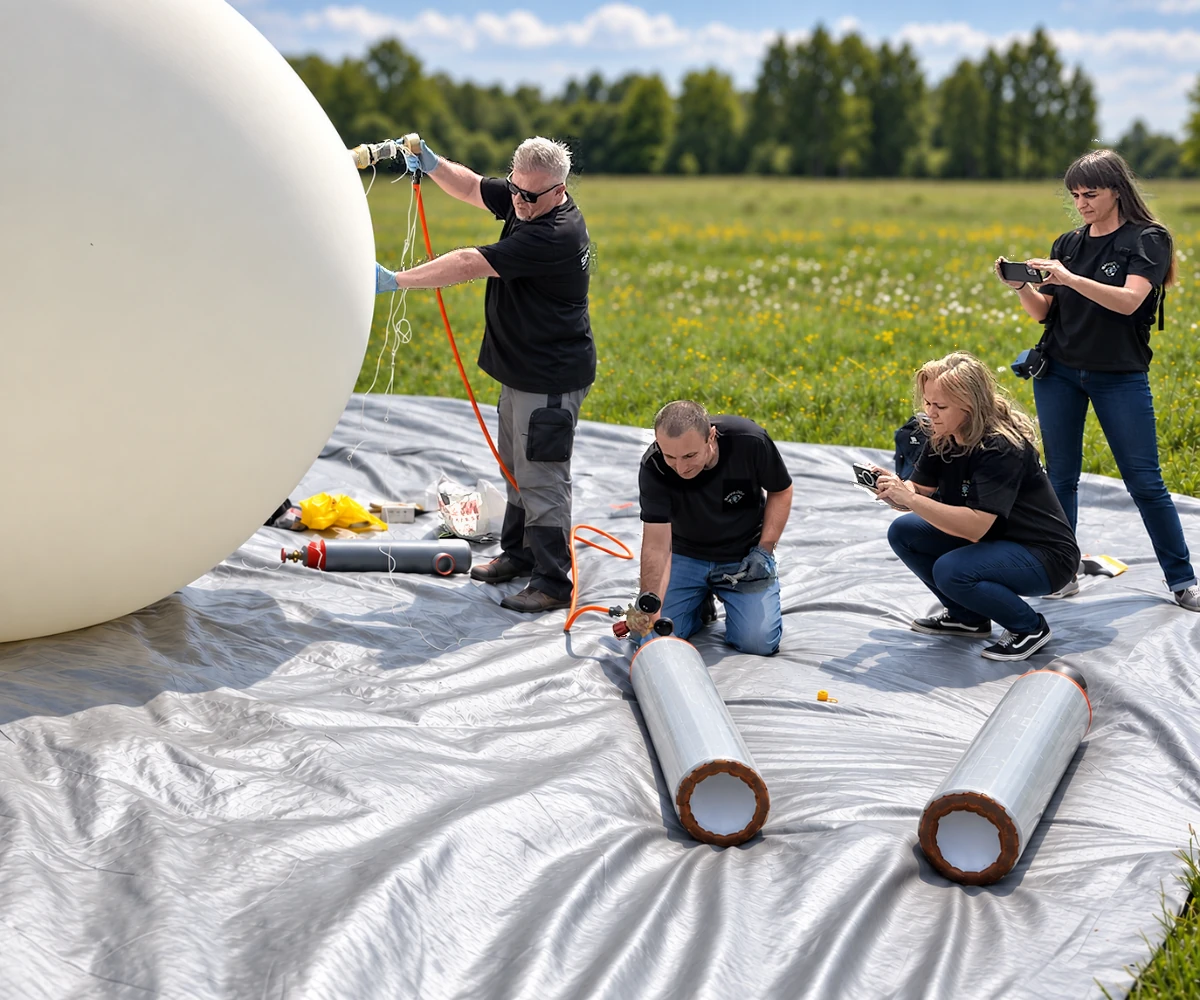
Communication and tracking
in one mission.
With AstroLife: a Mode S / ADS-B transponder, multiple tracking systems, Wenet image transmission and payload recovery.
Explore NSL-45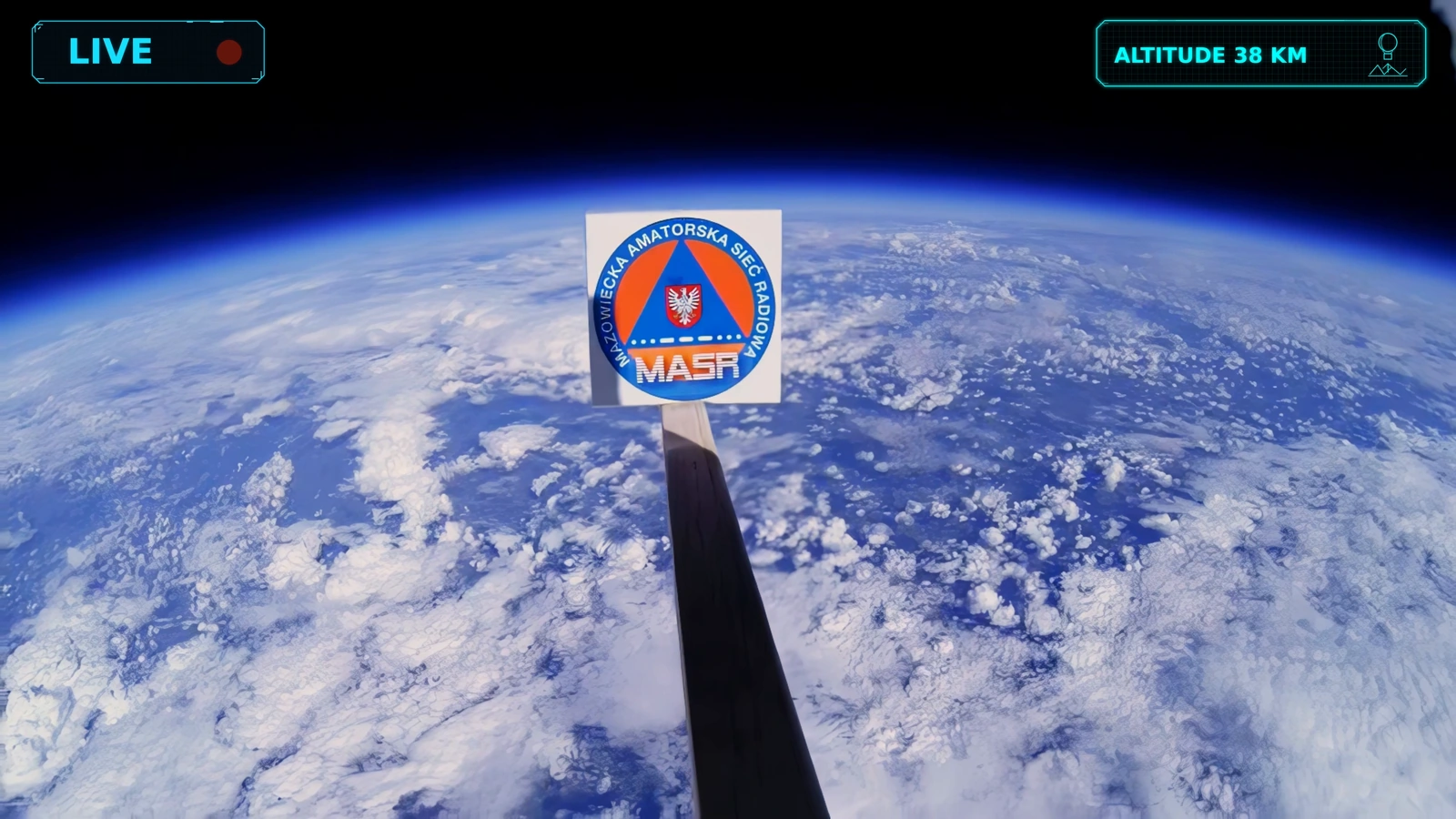
A flight to 38 km
with an HD video downlink.
A mission with MASR: 38,153 m, approximately −50°C and a flight duration of 3 h 27 min. Our DVB-S2 transmitter delivered video to receivers on the ground.
Explore the flightThese parameters describe specific completed missions. The scope of each future flight is agreed individually.
Prototypes and unmanned aircraft in the stratosphere.
Examples of projects we can discuss: balloon-borne satellite prototypes and the carriage of an unmanned aircraft for an individually planned flight test.
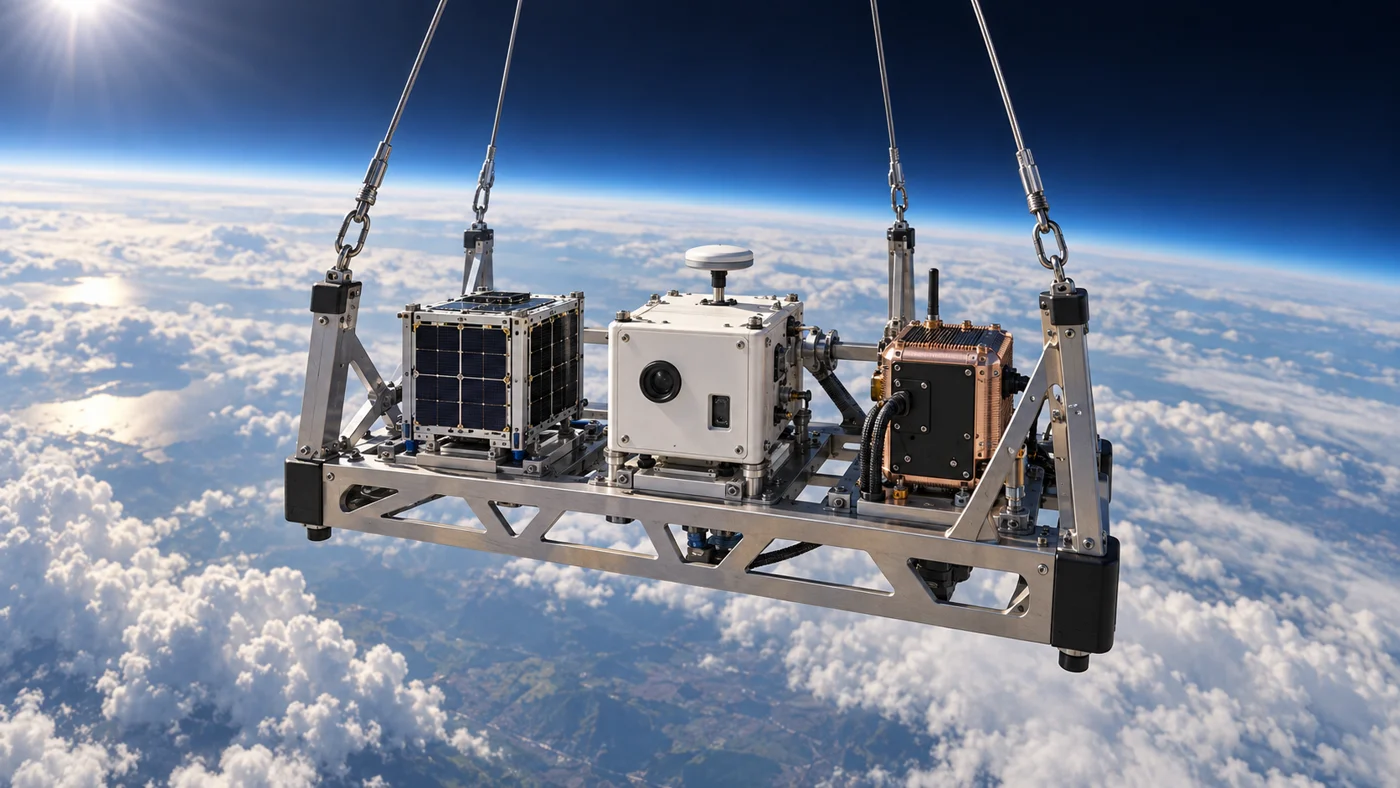
Satellite prototypes and experimental payloads
Stratospheric testing of instruments and satellite prototypes.
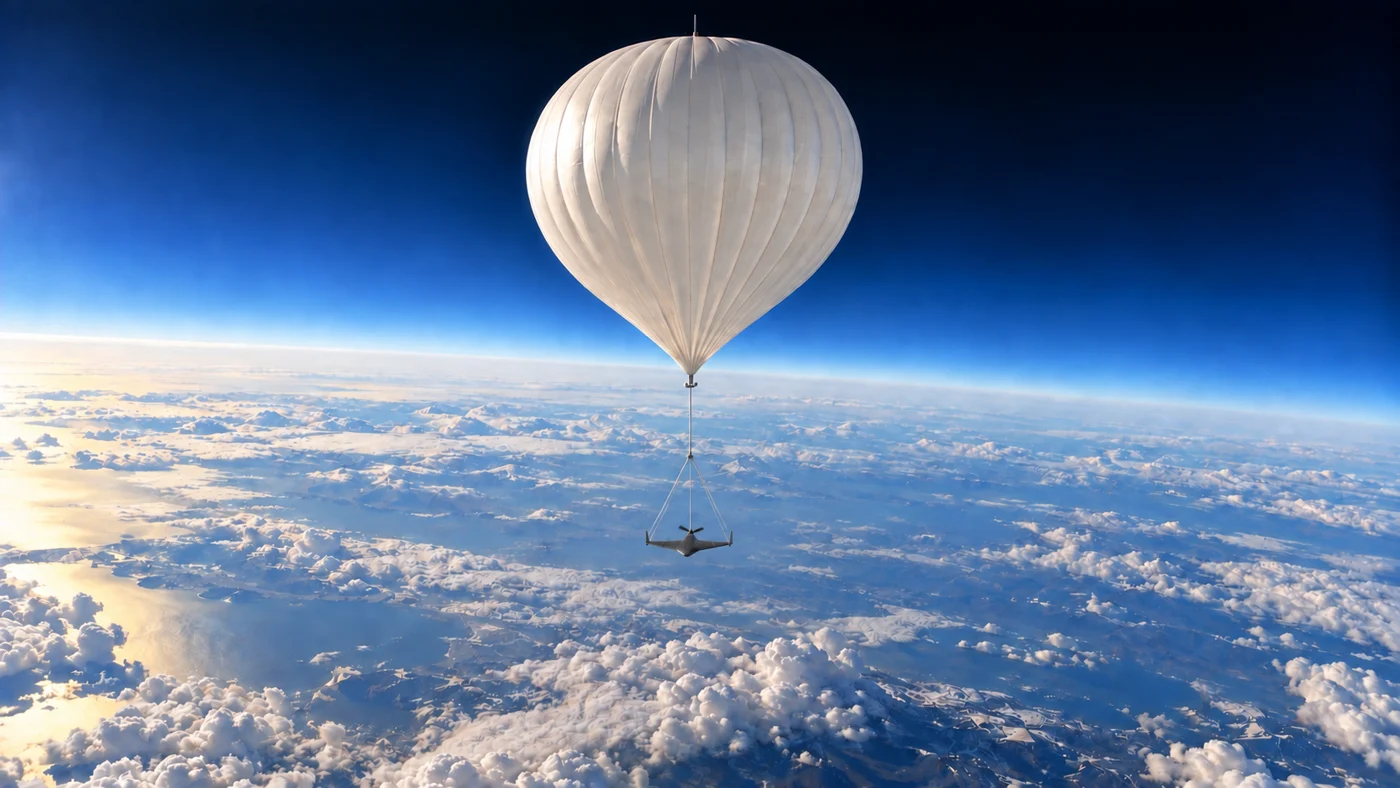
Balloon-borne unmanned aircraft
Balloon carriage of an unmanned aircraft and planning of a release trial. The scope and flight profile are agreed for each project.
Visualisations of example applications.
Example payload concept - visualisation
A concept for a balloon-borne capsuleVisualisation · 64 s · an example of concept presentation
Before we plan the flight
What do we need to get started?
The test objective, payload description and expected data. If available, include mass, dimensions, power, interfaces and planned timing. We can clarify missing parameters during the discussion.
Is a live downlink available?
We have operated DVB-S2 HD video and digital image downlinks. For each new mission, we select the system to suit the payload, ground reception and experiment requirements.
What altitude and test duration are possible?
The completed Science Picnic mission reached 38,153 m and lasted 3 h 27 min. A new flight profile must be agreed separately; one mission’s results are not a fixed specification for the service.
How do we plan a project for a defence organisation?
We start with the research objective and test scope. We agree payload integration requirements, the measurement plan, documentation exchange and the terms of cooperation.
Flight-tested experience
See archive missions covering digital television, remotely requested photographs and high-altitude radio trials. Explore the mission archive.
Discuss the test objective and required data.
Your first enquiry can use a general, non-sensitive description. Include your organisation, test objective and expected outcome. We will agree how to exchange further documentation during the discussion.
kontakt@skyedge.plIn our first discussion, we will clarify the objective, possible approach and information needed for a quote.
Start with a non-sensitive description. We can clarify mass, power, interfaces and documentation requirements during the discussion.
Your email and project description are required. We will use your details to respond to your enquiry. Privacy policy