
Through our onboard cameras
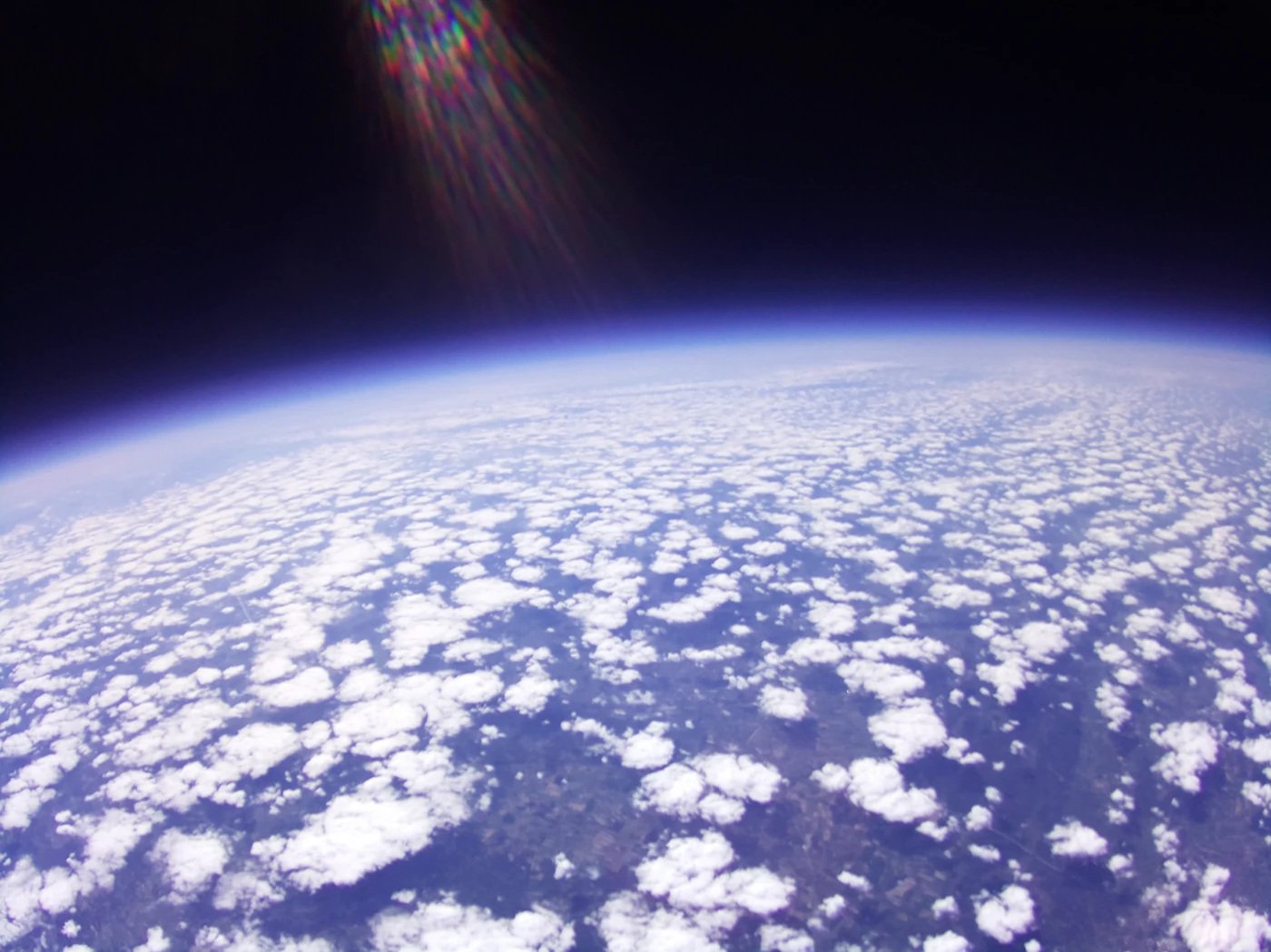
The most striking change is the scale. Roads and fields give way to broad cloud patterns. Above them, a blue horizon separates the bright Earth from a dark sky. Here are real views from SkyEdge flights - and what makes them look this way.
A journey from streets to cloud patterns
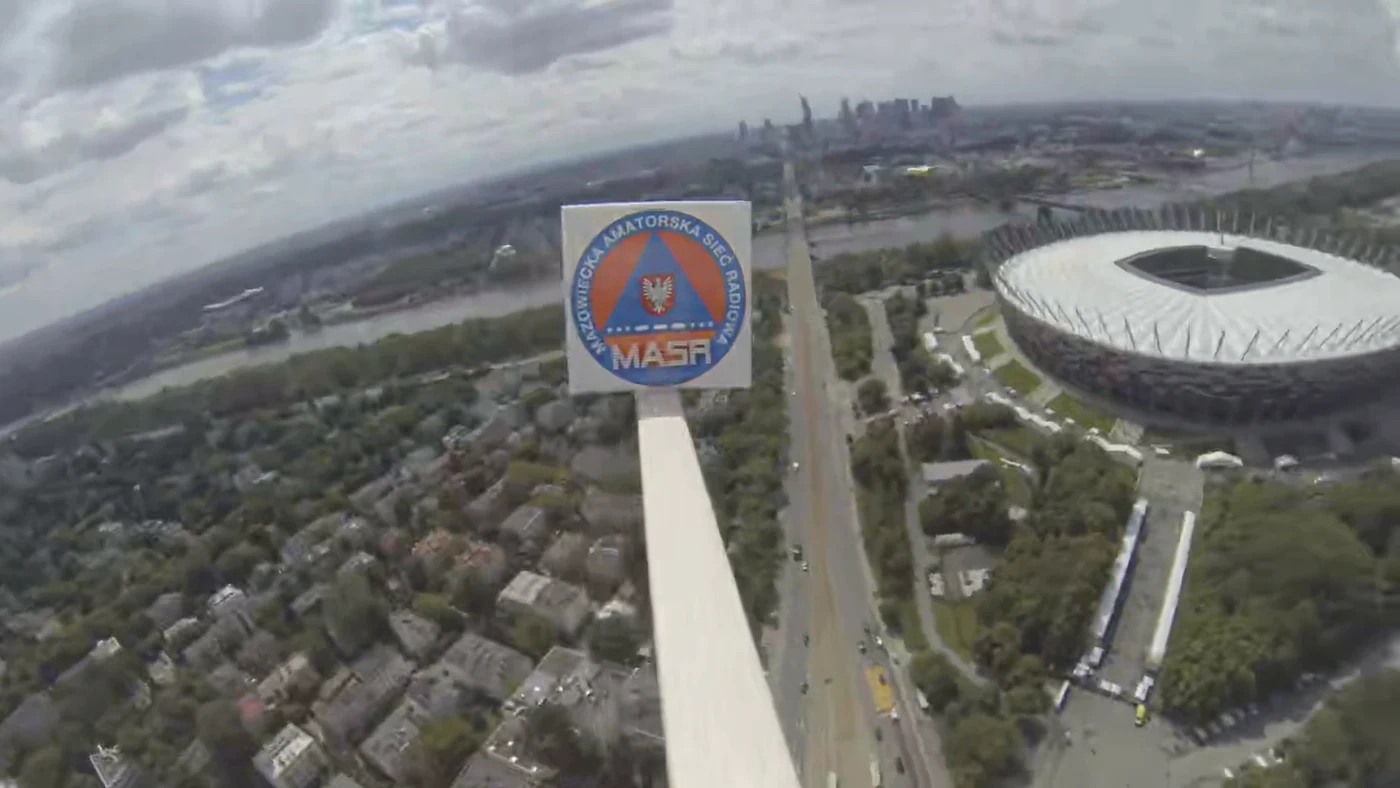
During ascent, familiar landmarks are still visible. In our Science Picnic recording, you can recognise PGE Narodowy and Warsaw below the camera. Higher up, individual buildings become less important to the picture. Clouds, terrain and the horizon begin to fill it.
Why does the sky become so dark?
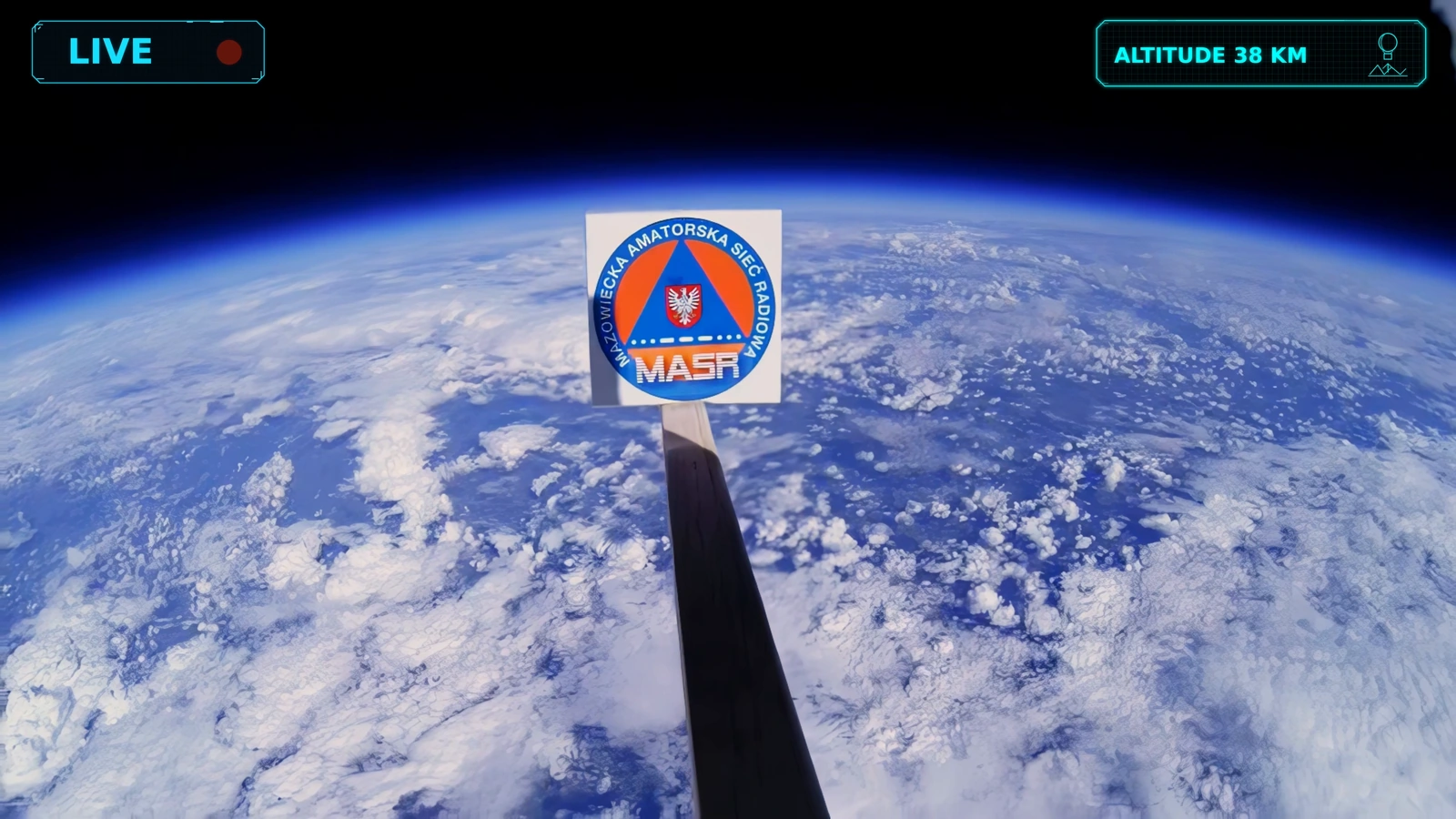
At stratospheric altitudes, the thinner air scatters less sunlight. Looking away from the Sun, the sky can appear much darker than it does from the ground. The camera exposure and viewing direction also affect the recording: a bright cloud layer and a dark sky create a large contrast in the same frame.
The horizon is part of the composition
The broad view gives photographs their distinctive character. Camera angle and lens choice change how the horizon is drawn in the frame. A wide-angle lens can exaggerate curvature, so the picture is best understood as a view from the flight rather than a measurement of Earth’s shape.
A setting that changes throughout the flight
Sunlight, cloud cover and payload orientation shape each shot. A product, artwork or instrument can be framed against this changing scene. Planning the mounting and camera view helps make the subject readable while leaving room for the landscape behind it.
Where does the stratosphere fit in the atmosphere?
NASA describes the stratosphere as extending approximately from 12 to 50 km. Its lower boundary varies with location and conditions. Most weather clouds form below it, in the troposphere. The atmosphere continues far above balloon altitudes; the blue band in a photograph is not its entire extent.
Read NASA’s overview of atmospheric layersCould this perspective become part of your project?
Plan campaign footage for a brand, or a flight for an artwork or personal symbol. Explore brand campaigns and creator projects.